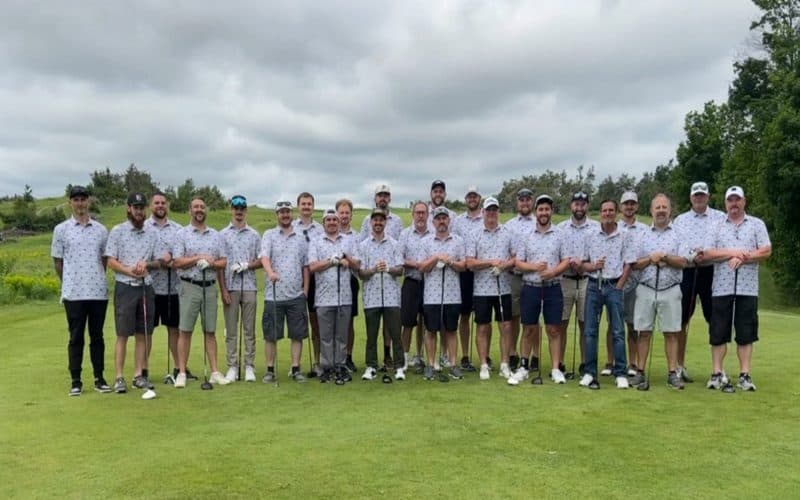

Every company has a drawer.
It's in the office supply closet, or the back of the marketing manager's car, or at the bottom of every employee's dresser at home. It's where the company shirts go. The ones with the logo on the left chest, ordered in a hurry before the trade show, in the one color the vendor had in stock, in sizes somebody guessed off a spreadsheet.
Nobody hates those shirts. That's the problem. Nobody feels anything about them at all.
The people who buy company apparel already know this. In Custom Ink's 2026 survey of more than a thousand corporate buyers, 67% said they only count what they bought as a success if people voluntarily wear or use it. Not how many shipped, not whether it arrived on time. Whether anyone actually used it. For a shirt, that means whether anyone puts it on. [1]
So here's the test we'd put every company shirt through before it's ordered: will this end up in the drawer?
Why people keep what they keep
The Promotional Products Association International asks thousands of people every couple of years why they hang on to branded items. In its 2023 study, the top answer was the one you'd expect: it's useful (65%). The second answer is the one most apparel buyers skip right past: they like the design (39%). [2]
Read that again. Nearly four in ten people keep branded stuff because they like how it looks. Not because of the logo on it. In spite of the logo, sometimes.
And apparel is the thing they're most likely to have in the first place. Clothing was the most common promotional item people in PPAI's 2023 study said they'd ever acquired (68%), and a quarter of people said they'd kept a promotional item for more than five years. [2]
So the shirt is the branded item people most often end up with, and design is one of the biggest reasons anything gets kept. Yet design is usually the last thing anyone thinks about when ordering one. The usual process goes: pick a blank, pick a color, put the logo on the chest, ship it.
That's how you end up with a drawer.
What the shirts people actually wear have in common
We've made a lot of polos. The ones that get worn to the grocery store on a Saturday have the same five things going for them.
1.They feel good before anyone looks at them
Comfort comes first, every time. A shirt that's itchy, boxy or hot never gets a second wear, no matter how good it looks. Corporate buyers know this too: in that same Custom Ink survey, 65% rated smart-fabric features like moisture-wicking and wrinkle resistance as very or extremely important for everyday uniforms. [1]
Our polos are a 4.5 oz polyester interlock knit: moisture-wicking, two-way stretch, athletic fit, crisp collars. That's not a flex. It's the minimum for a shirt someone's going to wear on a jobsite in July.
2.They fit the person wearing them
The fastest way into the drawer is the wrong size. "Everyone gets a large" is how half your team ends up wearing a dress and the other half a crop top.
Two things fix this. Real cuts, meaning men's and women's shapes, not one "unisex" box, with a size range that goes past XL. And letting people pick their own size. We send teams a single link where everyone chooses their own garment, fit and size, so nobody has to chase a spreadsheet and nobody gets guessed.
3.There's a design there, not just a logo
This is the one that matters most, and the one almost everyone skips.
A logo on a chest is a label. It tells you who paid for the shirt. A design is something you'd buy on your own. Custom Ink's survey found a quarter of buyers (24.6%) already consider the plain unisex cotton tee "overdone." [1] People have seen the logo shirt. They're not excited about another one.
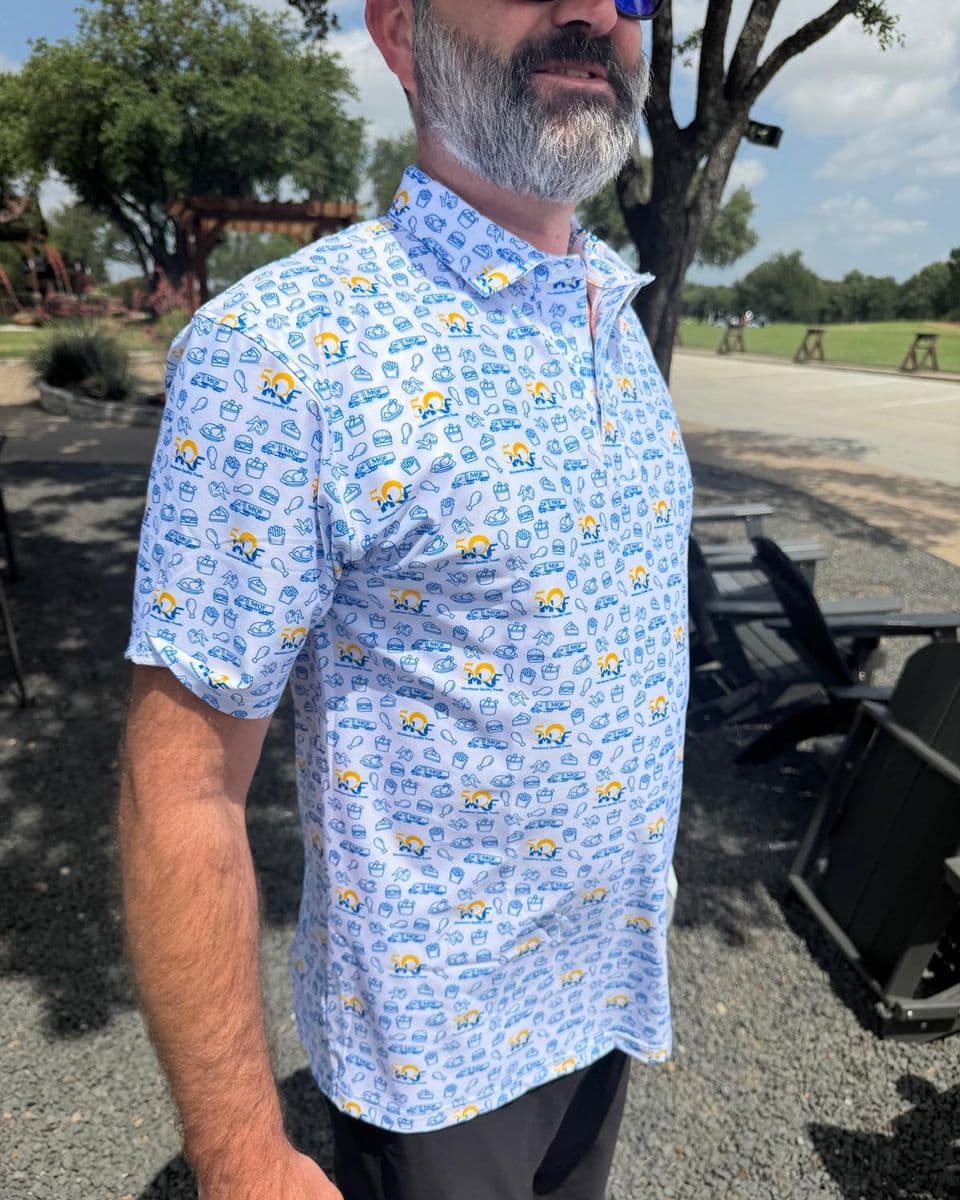
Our shirts are covered in a pattern a designer builds from your company's own brand: your marks, your colors, the things your people actually do all day. A heavy-equipment company's pattern might be excavators and dump trucks drawn in their brand colors. A dental practice's might be tiny, quiet tooth icons you only notice up close. Nobody's pulling a template off a shelf.
See the differenceBrowse patterns our designers have built for real teams.
View artwork4.It means something to the person wearing it
The best patterns have an inside joke in them. A landmark from your hometown. The truck your founder started with. The icon only people in your trade would recognize.
That's the difference between a uniform and a shirt someone's proud of. When the pattern is built from things your team does, your team sees themselves in it. It stops being "the company shirt" and becomes our shirt.
5.It works in more than one room
Here's the objection we hear most, so let's take it head on:
isn't an all-over print too loud for work?
It can be. A loud pattern done badly looks like a costume. But "loud" and "all-over" aren't the same thing. A good pattern is disciplined: a steady base color, a controlled scale, a small number of elements repeated with care. Pulled back far enough, it reads as texture from across the room. Up close, you see the story.
That's how the same shirt works at a client meeting, a trade show booth and a Saturday cookout. Bold doesn't mean unprofessional. Careless does. Our designers show you two or three directions before anything is made, and you approve real fabric swatches before the full run. You decide how loud your brand gets to be.
The drawer test, in one list

Before your next order, run it through these five:
Five yeses and it stays out of the drawer.
0 of 5Beyond the logo
We started Uncorp Wear because we were tired of the drawer. Every shirt we make is designed by a person, from your brand, and dye-sublimated into every panel, so the print doesn't crack, peel or fade the way a screen-printed logo does.
If your team's apparel keeps ending up in the drawer, we'd like to change that. You'll see concepts in about a week, full runs ship in 30 to 45 days, and polos start from $60 at volume. The $500 design fee is credited toward your order.
Sources
- Custom Ink, 2026 Swag Trends Survey, released January 14, 2026; more than 1,000 corporate buyers and event organizers. Vendor-commissioned. https://www.customink.com/about/press/swag-trends-2026
- PPAI, 2023 Consumer Study: Hungry for Promo, September 2023; more than 3,000 U.S. adults, online survey. https://www.ppai.org/wp-content/uploads/2024/06/2023-Consumer-Study.pdf