
Almost every company polo gets decided by one question nobody asks out loud: stitched or printed?
Most of the time the answer is made by default. Somebody searches for custom embroidered polos, picks a blank in a company color, uploads the logo, and the left chest is settled. That's a perfectly good shirt. It just isn't the only option, and it isn't the right one for every team.
The other option is dye sublimation, where the design is printed into the fabric itself and can cover the whole shirt. The two methods make very different polos. Here's how they actually differ, where each one wins, and how to pick.
A note up front: we make sublimated polos. The pattern is always sublimated, and we can embroider your logo on the chest if you want both. We've tried to be fair to embroidery below, because for some teams a classic embroidered polo is the better call.
What each one actually is
1.Embroidery: thread, stitched on
An embroidery machine stitches your logo into the shirt with thread, usually in one spot: the left chest, sometimes a sleeve or the back of the collar. A stabilizer goes behind the stitching to keep it flat. You get a raised, textured mark that you can feel with your thumb, on whatever blank polo you chose.
2.Sublimation: dye, fused in
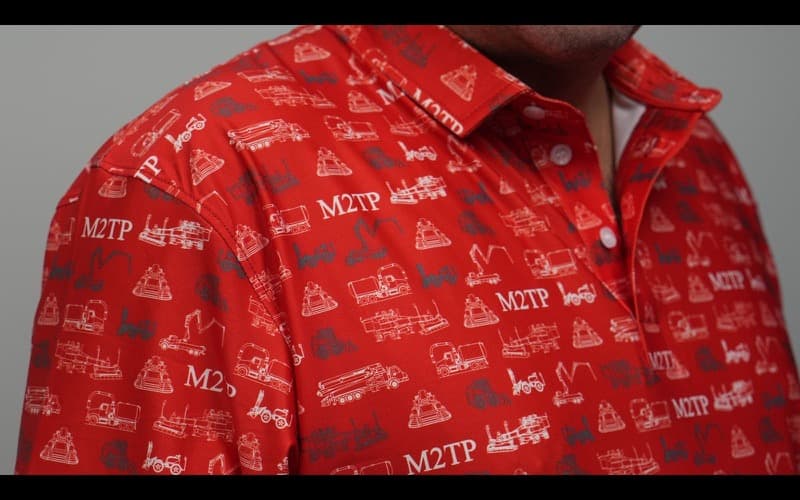
Dye sublimation uses heat to turn special ink into a gas that bonds with polyester fibers. The color ends up inside the fabric, not sitting on top of it. Because nothing is stitched or layered on, the design can go anywhere: front, back, sleeves and collar, in as many colors as the artwork needs. That's what makes an all-over print polo possible.
Embroidery decorates a shirt. Sublimation designs one.
That's the real difference. With embroidery, you're choosing a shirt and then adding a logo to it. With sublimation, the pattern is the shirt, so the whole garment gets designed around your brand.
Where embroidery wins
Embroidery has been the default for decades for good reasons.
- It reads as classic. A small stitched logo on a solid polo looks conservative and buttoned-up. For a bank's front desk or a law firm's golf outing, that may be exactly the look you want.
- It works on any fabric. Cotton piqué, blends, heavy jackets, hats. Sublimation needs polyester. If your team insists on cotton, embroidery is the answer.
- Texture. Raised thread has a feel and a sheen that print doesn't try to copy.
Where it struggles: fine detail and small text get lost in thread, and every extra color or location adds work. On thin, stretchy performance fabric, a dense logo can pucker, and the stabilizer behind it can feel stiff against your chest on a hot day. And the shirt itself is still a blank. Your logo is the only thing that makes it yours.
Where sublimation wins
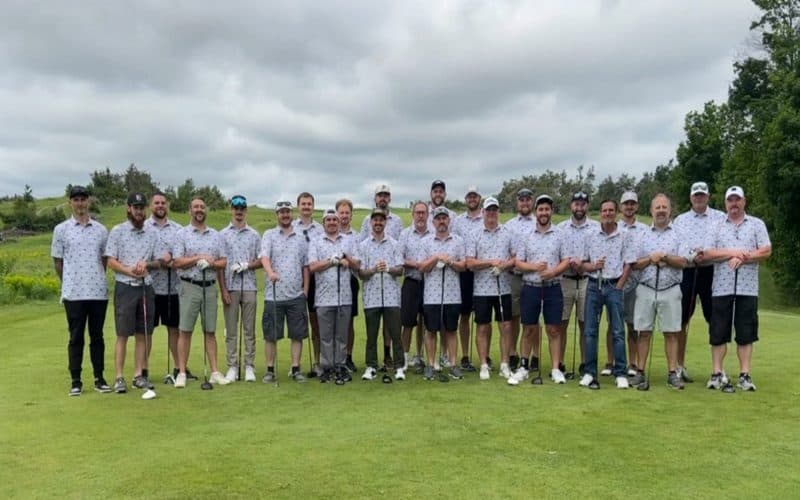
- The whole shirt is yours. A pattern built from your trucks, your tools, your city or your product turns a uniform into something people recognize from across a jobsite or a convention hall.
- Nothing to crack, peel or snag. The design is part of the fabric, so it feels like an unprinted shirt and has no edge to lift in the wash.
- Color and detail are free. A twelve-color illustration costs the same to print as a one-color one, and fine linework holds up.
- It suits performance fabric. Polyester is what moisture-wicking polos are made of anyway. For crews who work outside in Texas heat, that matters more than texture.
Where it struggles: it only works on polyester or high-polyester blends, so cotton is out. White can't be printed, because white areas are simply the fabric showing through, which means sublimated shirts start from a light base. And because the design is the whole garment, it takes a designer, not just a logo upload. That's more work up front, and it's also the point.
Four questions that decide it
1.Where will the shirts be worn?
Air-conditioned office, client meetings, a conservative industry: embroidery is a safe, good choice. Outdoors, on a jobsite, on a golf course in August: performance polyester and a printed design will be more comfortable and get noticed.
2.Do you want the shirt to be recognized, or just identified?
A chest logo identifies the company if someone is standing close enough to read it. A pattern built from your brand gets recognized from across a parking lot. Ask which one your team, your customers and your trade show booth actually need.
3.Will people wear it when they don't have to?
This is the question we wrote about in The Drawer Test. Shirts that get worn on the weekend do more for a brand than shirts that only come out on Fridays. In PPAI's 2023 consumer study, liking the design was the second most common reason people kept a promotional item, behind usefulness. The method you pick decides how much design you get to work with.
4.What's your timeline?
Embroidering a logo on stocked blanks can be quick. A fully designed sublimated polo takes longer, because a designer builds the pattern first and the shirts are made for you. If your date is close, read Work Backward From the Day You Need It before you decide.
Where we land
We started Uncorp because the company polo had turned into a plain shirt with a logo on it. So every polo, quarter-zip and hoodie we make is dye-sublimated across every panel with a pattern a designer builds from your brand, and an embroidered chest logo can go on top if you want one.
First concepts land in about three days. Full runs ship 30 to 45 days from your order, with a minimum of 20. Polos start from $60 at volume, and the $500 design fee is credited toward your order.